Kasa Smart Plug HS103P4: Put Everyday Devices on a Schedule Without Replacing Them
This article contains affiliate links. As an Amazon Associate I earn from qualifying purchases.
A lamp that always gets left on. A fan you only need for a few hours. Holiday lights you have to unplug every night. A coffee maker you wish could be ready before you walk into the kitchen.
None of those problems require a new appliance. Sometimes the missing piece is simply control over the outlet.
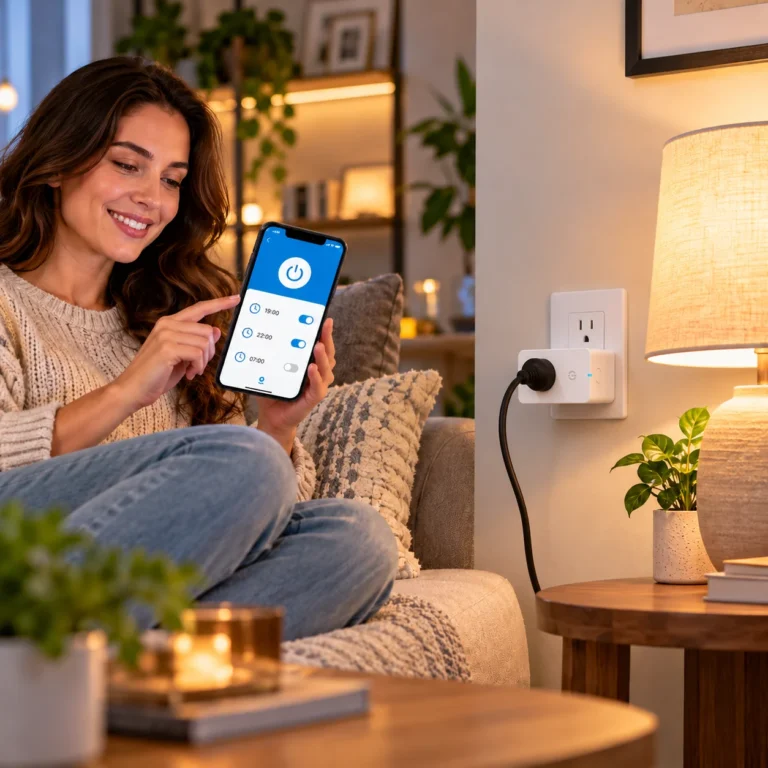
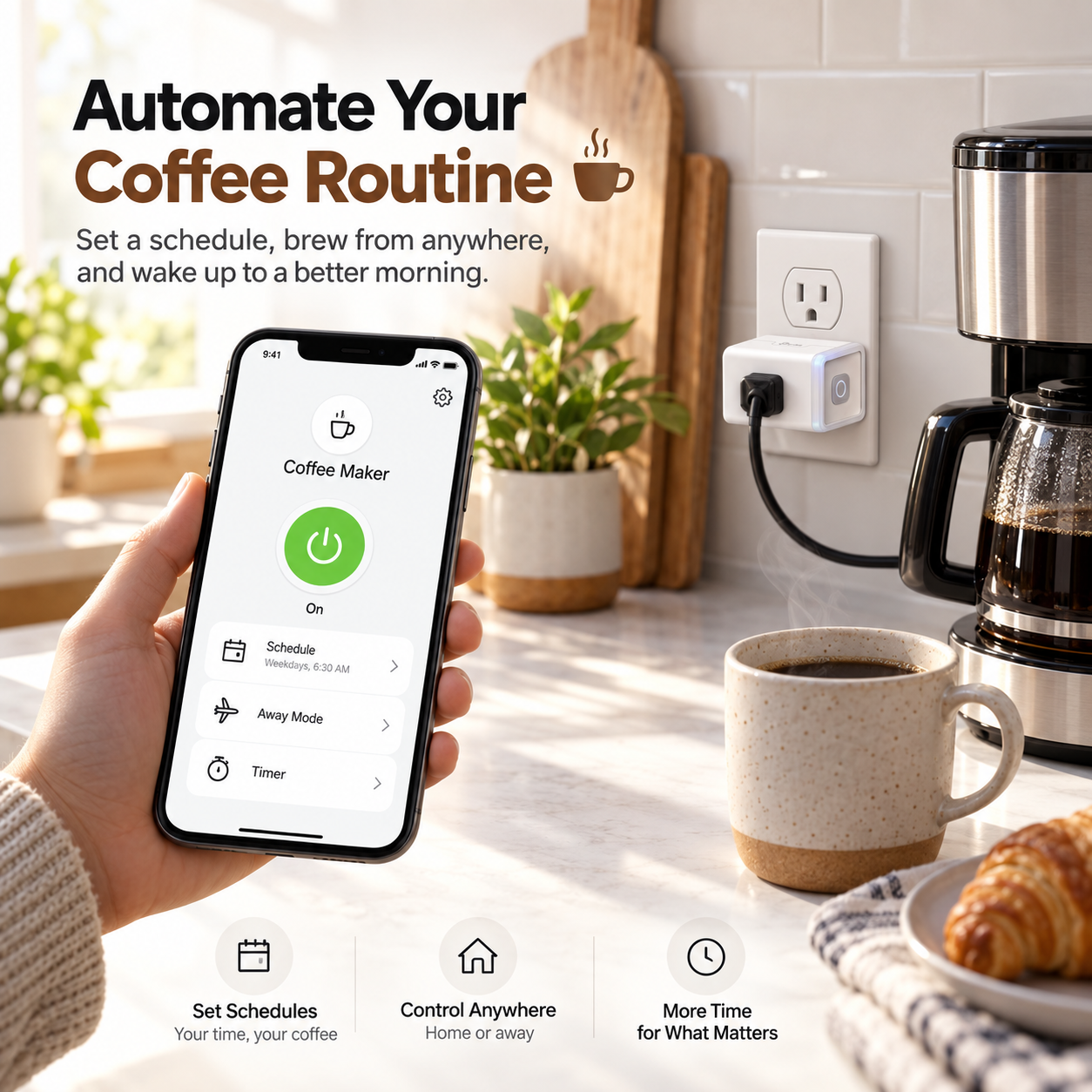
The Kasa Smart Plug HS103P4 is a four-pack of compact Wi-Fi plugs designed for exactly that kind of job. Instead of replacing a lamp, fan, or other simple plug-in device with a “smart” version, you place the Kasa plug between the device and the wall outlet. From there, the Kasa app can turn the power on or off, run schedules, and manage the plug remotely.

The useful idea is simple: make an ordinary device predictable
A smart plug does not make every appliance intelligent. What it gives you is reliable control over power. For devices that return to their previous state when power is restored, that can be enough to automate a surprisingly useful part of the day.
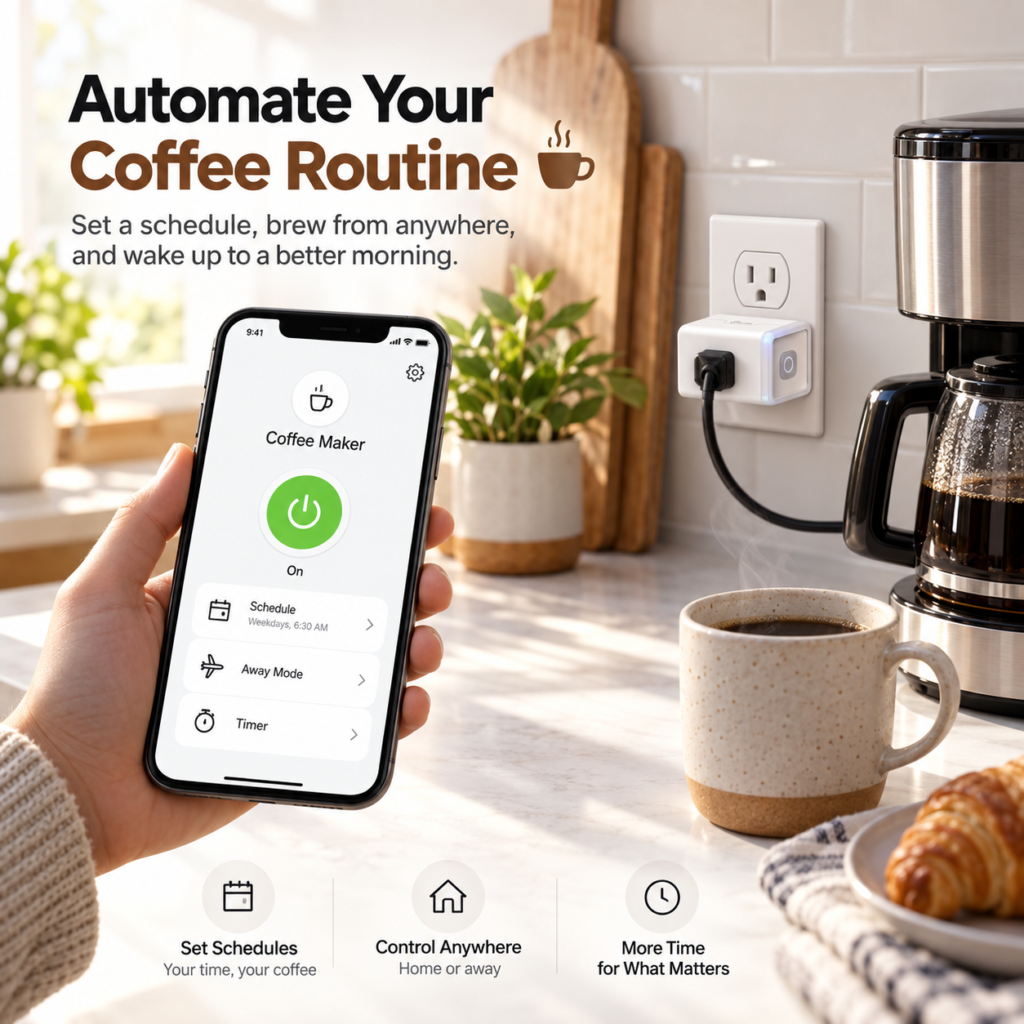
A table lamp can switch on before sunset. A fan can shut off after you fall asleep. Decorative lights can follow the same schedule every day. A coffee maker with a physical on/off switch can potentially be paired with a morning routine, provided the appliance is suitable for that kind of unattended use.
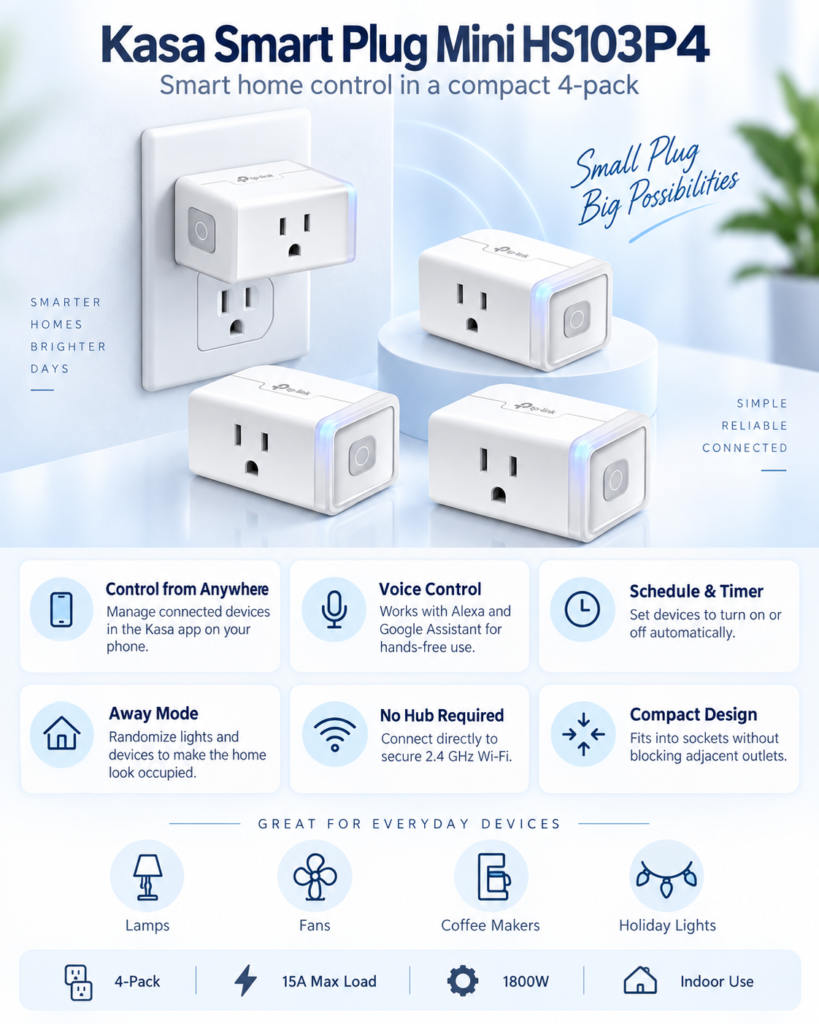
Kasa’s official HS103 page supports schedules, remote on/off control, scenes, grouping, Alexa and Google Assistant voice control, and operation over a 2.4 GHz Wi-Fi network without a separate hub.
Why a four-pack changes the value
One smart plug usually solves one small annoyance. Four plugs let you build a routine across different rooms.
You might use one for a living-room lamp, another for a bedside fan, one for seasonal lights, and keep the fourth for a device you only occasionally want on a timer. Because the plugs can be grouped with other Kasa devices, you can also make several devices respond together from the app.
The compact design helps here. Kasa says two HS103 plugs can fit in the same standard wall outlet, which is much more practical than oversized smart plugs that block the second socket.
Good everyday use cases
- Lamps and accent lighting that you want to run on a consistent schedule.
- Fans that only need to operate during part of the day or night.
- Holiday or decorative lights that are annoying to switch manually.
- Simple electronics that benefit from remote power control.
- Routines where several Kasa devices need to turn on or off together.
The part people often misunderstand about smart plugs
A smart plug controls electricity to the device. It does not press buttons for you.
If an appliance requires you to press a digital power button every time electricity is restored, cutting and restoring power with a smart plug may not actually turn that appliance back on. Devices with simple mechanical switches tend to be more predictable.
That is why it is worth testing the appliance before building a routine around it: switch the appliance on, unplug it, plug it back in, and see whether it resumes operating. If it does not, a smart plug may still be useful for shutting it off remotely, but it will not provide full on/off automation.
Setup requirements are straightforward
The HS103 uses 2.4 GHz Wi-Fi and does not require a separate hub. Setup is handled through the Kasa Smart app. Once connected, the plug can be controlled from the phone, placed on a schedule, or linked with Alexa or Google Assistant for voice commands.
TP-Link lists the newer HS103 hardware at up to 15 amps resistive at 120 volts, with 1,800 watts for general use. Because hardware versions can vary, check the exact electrical rating printed on the plug and the current listing before connecting a higher-load device.
Kasa also specifies the HS103 for indoor use. That matters if you are thinking about holiday lights or other seasonal setups near doors, patios, or garages: the smart plug itself should stay in a suitable indoor location unless you are using a product specifically rated for outdoor use.
Where this feels like a genuine upgrade
The best smart-home products are often the ones that remove a tiny repeated task rather than creating a new hobby. The HS103 fits that pattern.
You do not have to replace a lamp with a smart lamp. You do not have to install a wall switch. You do not need another hub. You can start with one outlet, decide whether the routine is useful, and use the other plugs where they make sense.
That makes the four-pack especially practical for someone who wants to automate a few ordinary things around the house without turning the entire home into a smart-home project.
The Everyday Upgrade take
If you have several plug-in devices that follow predictable routines, the Kasa HS103P4 offers a simple way to make those routines easier. The value comes from scheduling, remote control, and grouping — not from making the plug itself feel impressive.
Before buying, check that the devices you plan to use behave properly after power is restored, stay within the plug’s current electrical rating, and are suitable for unattended operation.
This article contains affiliate links. As an Amazon Associate I earn from qualifying purchases.
(Paid link) Check current price and availability on Amazon