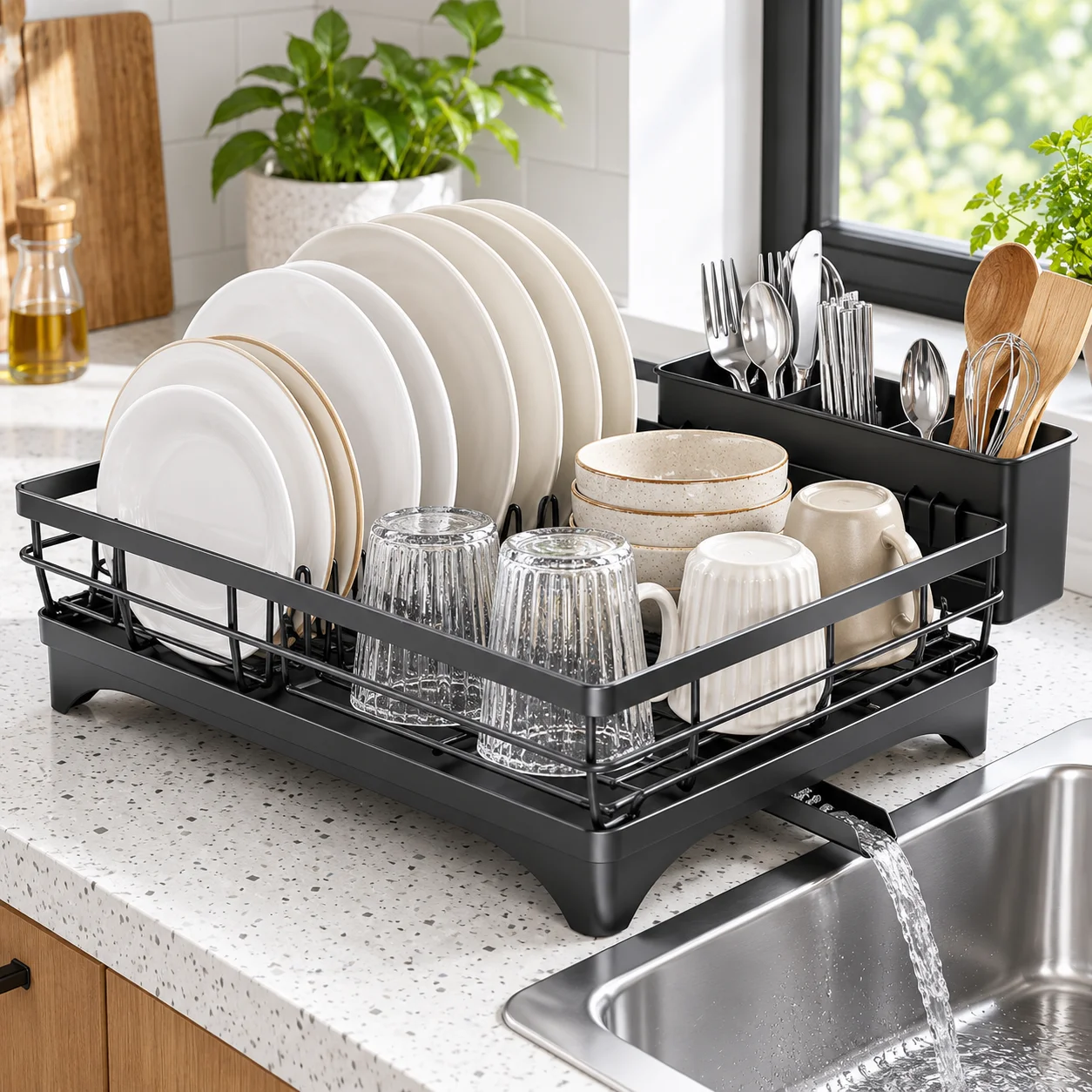
SNTD Dish Drying Rack: A Smarter Way to Keep the Counter Drier
This article contains affiliate links. As an Amazon Associate I earn from qualifying purchases.
The SNTD dish drying rack is built around a simple kitchen problem: freshly washed dishes need somewhere to sit, but the counter beside the sink is already one of the busiest surfaces in the room. Plates lean against bowls, cups collect in whatever open spot is left, and cutlery ends up spread across a damp towel while everything waits to air-dry.
A dedicated countertop rack does not make the washing disappear, but it can make the stage after washing feel more orderly. The SNTD setup gives plates, cups, bowls, and utensils defined places while a drainboard and swivel spout help move runoff toward the sink. That matters most in a compact kitchen, where the wet side of the counter starts to feel crowded again.
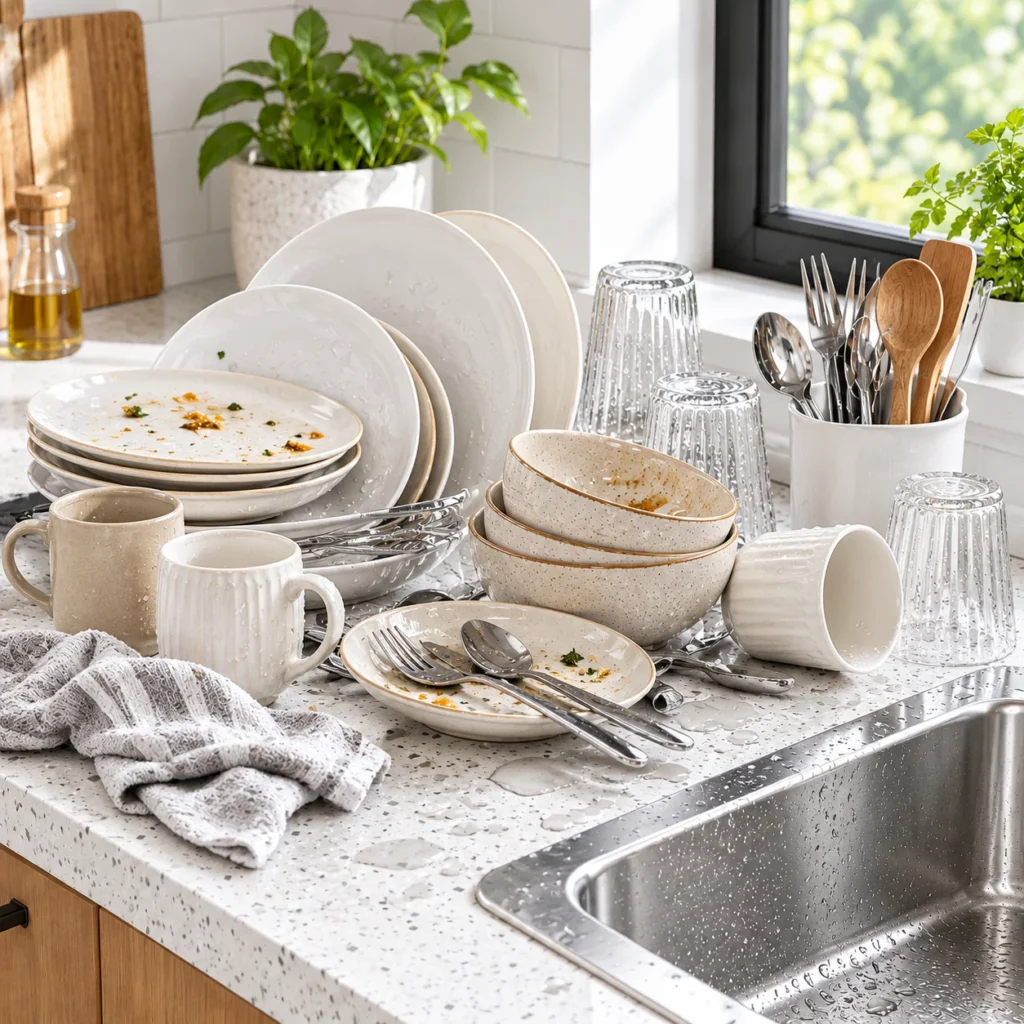
Why the SNTD Dish Drying Rack Works Well Beside the Sink
The basic advantage is separation. Instead of letting wet dishes occupy the same counter space used for food prep, coffee, or everyday kitchen tools, the rack creates one zone for drying. Plates can stand upright, cups and bowls can sit inside the frame, and smaller utensils have their own side holder.
The rack is also designed to work with gravity rather than asking you to empty a flat tray manually after every load. Its drainboard sits beneath the dishes, and the outlet spout can be aimed toward the sink so water has a path away from the rack instead of collecting in the tray or spreading across the countertop.
What Makes the Drainage Setup Useful
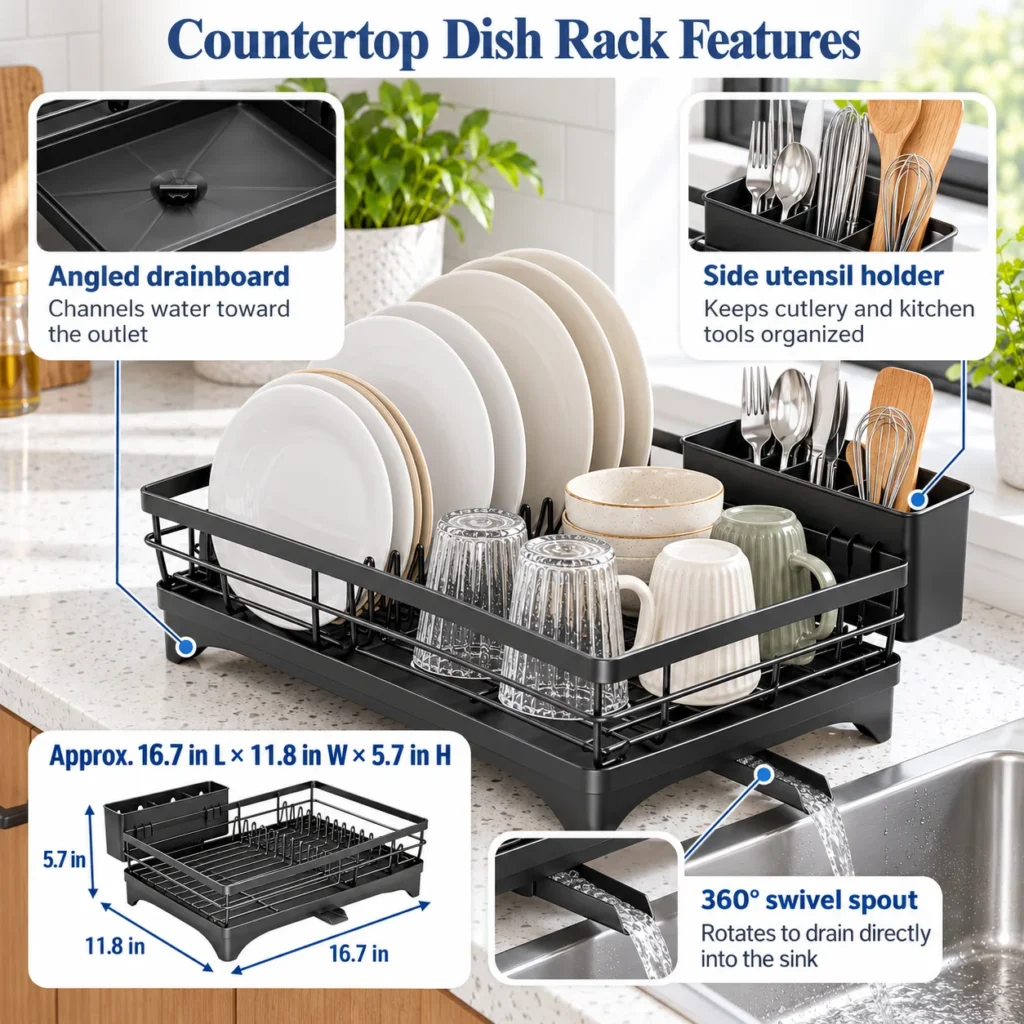
The angled drainboard helps guide runoff
A drying rack becomes much more practical when the water underneath it has somewhere to go. The SNTD design uses an angled drainboard that channels runoff toward the outlet. That does not mean the counter never needs wiping, but it reduces the need to let a pool of water sit under freshly washed dishes.
The swivel spout gives you more placement flexibility
The spout can rotate so you can aim the outlet toward the sink rather than being locked into one exact rack position. That is useful when the available counter space sits slightly to the left or right of the basin. The exact-ASIN product documentation describes the drain as adjustable and 360-degree swivel, which is the feature shown in the final infographic.
The side utensil holder separates small tools
Forks, spoons, knives, whisks, and other slim items can be awkward to mix in with plates and cups. The independent side holder creates a separate section for those smaller pieces, which makes the rack feel less crowded and keeps cutlery easier to grab when everything is dry.
Where This Countertop Dish Rack Fits Best
The SNTD dish drying rack measures approximately 16.7 inches long, 11.8 inches wide, and 5.7 inches high according to exact-ASIN documentation. That makes it a relatively compact single-tier design rather than a tall two-level system. It is a good match for kitchens where you want everyday drying capacity without turning the whole counter into a permanent storage structure.
It should work especially well for daily plates, bowls, mugs, glasses, and normal cutlery loads. The rack is most useful when it can sit close enough to the basin for the drain spout to reach. Before buying, measure the usable strip of counter beside your sink and check the direction in which you want the spout to face.
What It Does Not Solve
This is still a countertop rack, so it needs dedicated surface space. If the counter beside your sink is extremely narrow, even a compact rack can feel large once it is loaded. A wall-mounted or over-sink solution may be a better fit in a kitchen where every inch of horizontal space already has a job.
It is also not a closed storage system. Dishes are meant to air-dry in the open, which is useful for airflow but means the rack will remain visually present between washing sessions. If your preference is a completely clear countertop after every meal, the more important question may be whether you have cabinet space to put the rack away when it is not in use.

Buyer Questions Before You Choose the SNTD Dish Drying Rack
Will the spout actually reach my sink?
Measure from the proposed rack position to the sink edge. The swivel mechanism gives you useful flexibility, but the rack still needs to sit close enough for the outlet to extend over the basin rather than over the countertop.
Is the size right for my usual dish load?
Think about a normal weekday load rather than the largest dinner you host all year. This rack makes the most sense when it can handle the dishes you routinely wash by hand without forcing you to stack wet items on top of one another.
Do I need a utensil section?
If forks, spoons, knives, or cooking tools usually end up scattered on a towel, the side holder is one of the more useful details. It gives those items a defined zone and leaves the main rack free for larger pieces.
The Everyday Upgrade Take
The appeal of the SNTD dish drying rack is not that it reinvents dishwashing. It simply organizes the part that tends to get messy after the washing is done. The combination of a single-tier rack, angled drainboard, swivel spout, and separate utensil holder creates a straightforward drying station that is easier to manage than a pile of wet dishes spread across the counter.
For a small or medium kitchen with enough sink-side space, that is a useful kind of upgrade: simple, visible, and easy to understand. The main thing to check before buying is fit. If the dimensions work with your counter and the spout can reach your sink, the design solves the everyday problem it is meant to solve without adding unnecessary complexity.
This article contains affiliate links. As an Amazon Associate I earn from qualifying purchases.
Check current price and availability for the SNTD dish drying rack on Amazon.
If the area around your sink also gets crowded with sponges, brushes, and soap, our Cisily Sink Caddy Organizer guide covers another compact way to keep the same workspace tidier.
Browse more Kitchen Gadgets for practical upgrades that make everyday cooking and cleanup easier.